
Hair loss is more than just a physical change; for many men and women in Ahmedabad, it affects personal confidence, professional presence, and self-esteem. When non-surgical solutions no longer provide the desired coverage, a hair transplant stands out as the most reliable, permanent solution. However, as the demand for hair restoration has grown across Gujarat, so has a worrying trend: the rise of low-cost, technician-driven clinics.
In many commercial setups, the doctor merely greets you during the consultation, while non-medical technicians perform the actual surgical steps—from local anesthesia and graft extraction to channel creation.
Understanding the differences between a doctor-led hair transplant in Ahmedabad and a technician vs doctor hair transplant is critical before scheduling your procedure. Your scalp has a finite donor supply, and who performs your surgery directly impacts your safety, density, and lifelong result.
The Medical Reality: A Hair Transplant is a Delicate Surgical Procedure
A common misconception promoted by low-cost centers is that modern hair transplantation (such as Follicular Unit Extraction, or FUE) is simply a “cosmetic treatment” akin to a haircut or facial. In truth, hair restoration is a meticulous micro-surgical procedure.
It involves cutting into vascular scalp tissue, navigating sensory nerves, administering local anesthesia, and transplanting living organ grafts. Every step demands an in-depth understanding of:
- Scalp Anatomy and Vascularity: Avoiding deep tissue trauma, excessive bleeding, or localized skin necrosis (tissue death).
- Pharmacology and Anesthesia Administration: Safely calculating emergency-ready local anesthetic dosages tailored to a patient’s body weight and medical history.
- Aseptic Surgical Protocols: Maintaining sterile medical standards to eliminate severe post-operative bacterial infections.
When non-medical staff perform surgical cuts, patients are exposed to uncalculated risks. A qualified medical doctor—specifically a trained Dermatologist (M.D.) or Plastic Surgeon (M.Ch/DNB)- possesses the clinical training required to handle intra-operative complications, monitor vital signs, and protect scalp tissue.
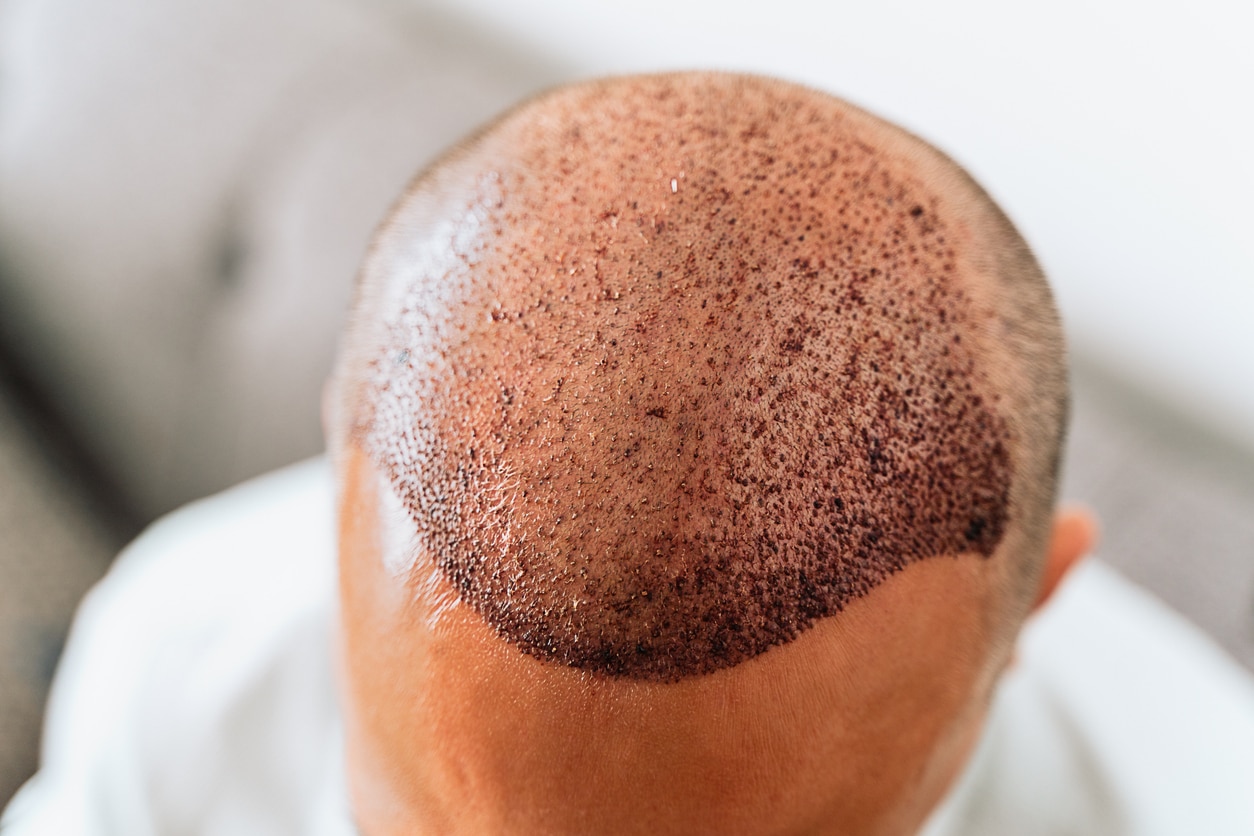
1. Graft Extraction & Transection Rates: Preserving Your Precious Donor Area
The back and sides of your head (the occipital zone) are known as the safe donor zone. The hair follicles in this area are genetically resistant to Dihydrotestosterone (DHT), the hormone responsible for male pattern baldness.
Here is the catch: Your donor area is finite. Once a follicular unit is destroyed or improperly harvested, it will never grow back.
The Technician Approach:
Technicians are often incentivized by speed rather than graft survival. Operating without formal medical training, they frequently punch at incorrect angles or improper depths beneath the scalp skin. This causes high transection rates—where the punch cuts through the hair follicle root, killing the graft before it can even be implanted. Transection rates in technician-driven clinics can reach 20% to 50%, meaning up to half of your harvested hair is permanently wasted.
The Doctor-Led Approach:
A skilled surgeon evaluates individual scalp elasticity, hair curl, skin thickness, and follicle direction across different regions of the head. By constantly adjusting the depth, angle, and rotational speed of the extraction tool, a doctor maintains a transection rate of under 5%. Every single harvested graft remains viable for implantation, ensuring maximum density without leaving the back of your head looking thin or patchy.
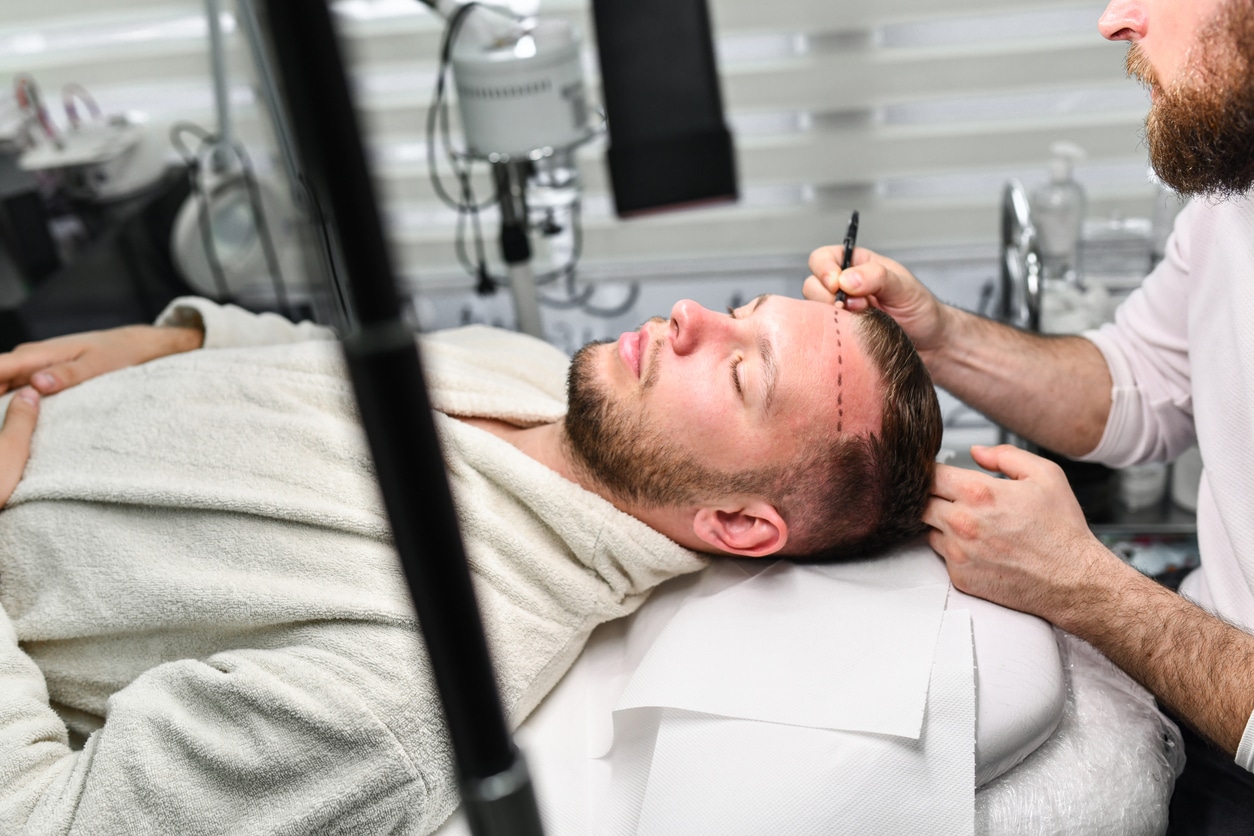
2. Channel Creation & Hairline Design: The Fine Line Between Art and Anomaly
If graft extraction represents the science of hair transplantation, channel creation (making the slits where hair is placed) represents the art. This phase dictates how natural your hair will look when it grows out.
| Feature / Aspect | Unnatural Technician Design | Natural Doctor-Led Design |
| Hairline Shape | Straight, rigid, unnatural hairline | Soft, feathered, irregular micro-zigzag |
| Placement Angle | 90° perpendicular plug-like angles | 10°–15° acute, natural hair direction |
| Graft Distribution | Multi-hair grafts placed at front | Single-hair soft grafts at hairline |
| Overall Aesthetic | High risk of “doll-hair” appearance | Seamless blend with natural features |
When evaluating a technician vs doctor hair transplant, hairline design is often where the difference is most visible.
Critical Surgical Decisions Handled Exclusively by a Doctor:
- Angulation and Direction: Natural hairline hair grows forward and flat against the forehead at acute angles of 10 to 15 degrees. Inexperienced technicians often make channels perpendicular (90 degrees) to the scalp. This results in the infamous “doll-hair” look, where hair sticks straight out and cannot be styled naturally.
- Micro-Pitting and Slit Depth: A doctor customizes channel depth according to the length of the harvested graft roots. Slits made too deep by technicians lead to pitting (dented skin), while slits made too shallow lead to cobblestoning (raised bumps around the hair root).
- Graft Sorting and Strategic Placement: A natural hairline begins with soft, single-hair follicular units placed in a feathered, irregular micro-zigzag pattern. Double and triple-hair units belong deeper inside the scalp to provide density. Technicians routinely mix these up, placing thick multi-hair grafts directly at the front line.
3. Patient Safety, Anesthesia & Anaphylaxis Preparedness
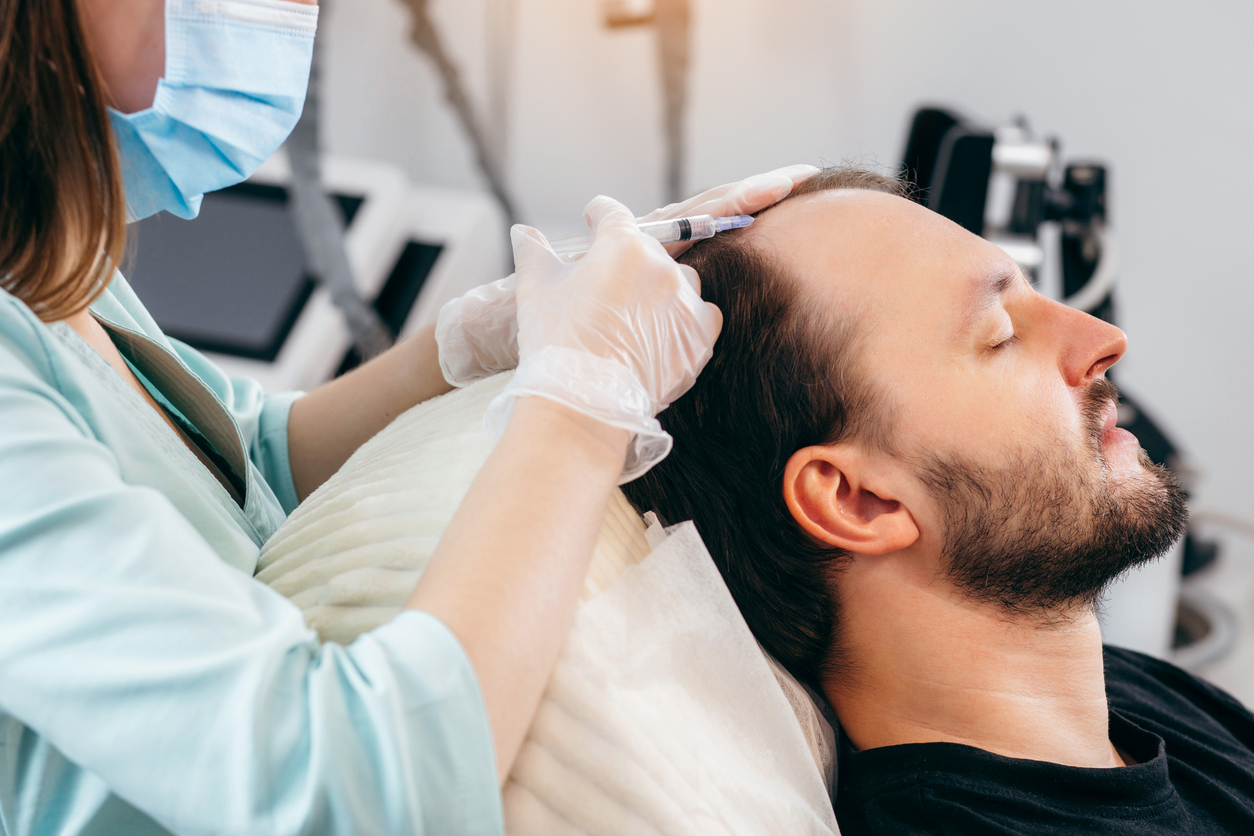
Local anesthesia makes hair transplant surgery comfortable, but administering it safely requires strict medical protocols.
Anesthetic agents like Lignocaine and Bupivacaine must be precisely calculated based on the patient’s weight, cardiac profile, and systemic health. Overdosage or accidental intravenous injection can trigger local anesthetic systemic toxicity (LAST), resulting in sudden blood pressure drops, seizures, or cardiac distress.
In a doctor-led hair transplant clinic in Ahmedabad, an experienced medical professional oversees:
- Pre-operative screening (ECG, blood sugar, bleeding parameters, allergy testing).
- Real-time monitoring of blood pressure, heart rate, and oxygen saturation.
- Emergency medical protocols and immediate administration of reversal agents if complications arise.
In technician-operated setups, non-medical staff lack the legal authority, training, and equipment to manage acute medical emergencies. Choosing a clinic where a doctor remains in the operation theater throughout the procedure ensures your safety from start to finish.
4. Long-Term Master Planning vs. Short-Term “Graft Packing”
Hair loss is progressive. A 25-year-old experiencing hairline recession today will likely experience thinning across the mid-scalp and crown over the next decade.
Unqualified technicians focus strictly on the present moment, often over-harvesting 4,000+ grafts in a single sitting to show impressive immediate coverage. This exhausts the donor zone completely. When hair loss progresses years later, the patient has zero remaining donor hair to cover new bald spots.
A certified hair restoration surgeon takes a long-term medical approach:
- Future Loss Projection: Mapping out potential hair loss patterns based on your age, family history, and miniaturization levels evaluated under trichoscopy.
- Donor Conservation Strategy: Harvesting only what is necessary today while preserving 30% to 40% of donor capacity for future maintenance or touch-up surgeries.
- Integrated Medical Therapy: Combining surgery with scientifically proven treatments (such as topical growth agents, oral DHT blockers, and Regenerative Growth Factor Concentrates) to preserve your native, non-transplanted hair.
Comparative Breakdown: Doctor-Led vs. Technician-Driven Clinics
| Parameter | Doctor-Led Hair Transplant | Technician-Driven Clinic |
| Surgical Execution | 100% Doctor-performed extraction & channels | Outsourced to non-medical staff |
| Graft Survival Rate | High (>95% viability) | Low to Moderate (20-50% transection) |
| Hairline Aesthetic | Natural, customized, age-appropriate | Generic, straight, “pluggy” appearance |
| Donor Site Management | Strategic preservation for future needs | High risk of over-harvesting & scarring |
| Medical Safety Standards | Full emergency setup & vitals monitoring | Minimal or non-existent medical oversight |
| Long-Term Outcome | Lifetime natural growth & healthy scalp | Frequent need for costly repair surgery |
Investing in Your Scalp: Why Quality Beats Discount Pricing
When comparing options, patients are often tempted by low per-graft prices offered by technician-led centers. However, a cheap hair transplant often turns out to be the most expensive choice in the long run.
Fixing a botched hair transplant requires complex repair procedures: removing pluggy grafts, repairing scalp scarring, and attempting to harvest sparse remaining donor hair. In many cases, if a technician severely damages your donor zone during the first attempt, full repair is no longer possible.
You only have one donor area. Entrusting it to a qualified, experienced hair restoration surgeon ensures that your investment yields natural, dense, and permanent results the very first time.
Frequently Asked Questions (FAQs)
Q1: Is it legal in India for technicians to perform hair transplant surgery?
A: No. According to official guidelines issued by the National Medical Commission (NMC) of India, hair transplantation is a surgical procedure that must be performed directly by a qualified medical practitioner (such as an M.D. Dermatologist or M.Ch/DNB Plastic Surgeon). Technicians are legally allowed only to assist with non-surgical steps like graft sorting, counting, and holding.
Q2: What is graft transection, and how does a doctor prevent it?
A: Graft transection occurs when the harvesting punch slices into or damages the hair follicle root beneath the skin, rendering the graft unusable. A qualified doctor minimizes transection by assessing follicle depth, angle changes, and scalp tissue resistance, keeping transection rates under 5%, compared to 20%–50% in technician-driven setups.
Q3: How can I verify if a clinic offers a truly doctor-led hair transplant in Ahmedabad?
A: During your consultation, ask the doctor directly: “Will you personally perform the local anesthesia, donor extraction, and slit-making channels?” Check the doctor’s registration credentials with the State Medical Council, read patient reviews, and ensure you meet your operating surgeon prior to procedure day.
Q4: Can a technician-led hair transplant cause permanent damage?
A: Yes. Risks include donor area over-harvesting (leading to patchy, empty spots at the back of the head), scalp necrosis (tissue death from improper slit depth), severe skin infections, and unnatural “doll-like” hairlines that require expensive corrective surgery.
Q5: What medical qualifications should I look for in a hair transplant surgeon?
A: Look for a surgeon holding a postgraduate degree in Dermatology (M.D. / D.N.B.) or Plastic Surgery (M.Ch. / D.N.B.) registered with the Medical Council of India (MCI) or National Medical Commission (NMC), ideally with specialized training and active membership in international or national hair restoration societies.
Q6: Why is hairline design considered a specialized surgical skill?
A: A natural hairline is not a straight line. It requires artistic judgment to mimic natural growth patterns using single-hair soft grafts at the front, placed at acute 10 to 15-degree angles in an irregular micro-pattern. Certified doctors customize this design based on facial bone structure, age, and future hair loss progression.
Take the Next Step Toward Safe Hair Restoration
If you are considering a hair transplant, prioritize surgical excellence, medical safety, and long-term donor preservation over low-cost shortcuts.
Schedule a direct 1-on-1 consultation with our senior hair restoration surgeon in Ahmedabad today. Allow our medical team to perform a detailed trichoscopy analysis and map out a customized, doctor-led plan for your hair restoration journey.
Dr. Kinnar Kapadia
Dr. Kinnar Kapadia is a leading Hair Transplant Surgeon in Ahmedabad, Gujarat, India known for delivering natural-looking, long-lasting results through advanced hair restoration techniques. As a Board-Certified Cosmetic Surgeon & Gold Medalist in Plastic Surgery, he combines surgical precision with an artistic approach to help patients regain their confidence. With extensive experience in hair restoration procedures, Dr. Kapadia specializes in personalized hair transplant procedures tailored to each patient's hair pattern, facial aesthetics and long-term goals.