History of Hair Transplant
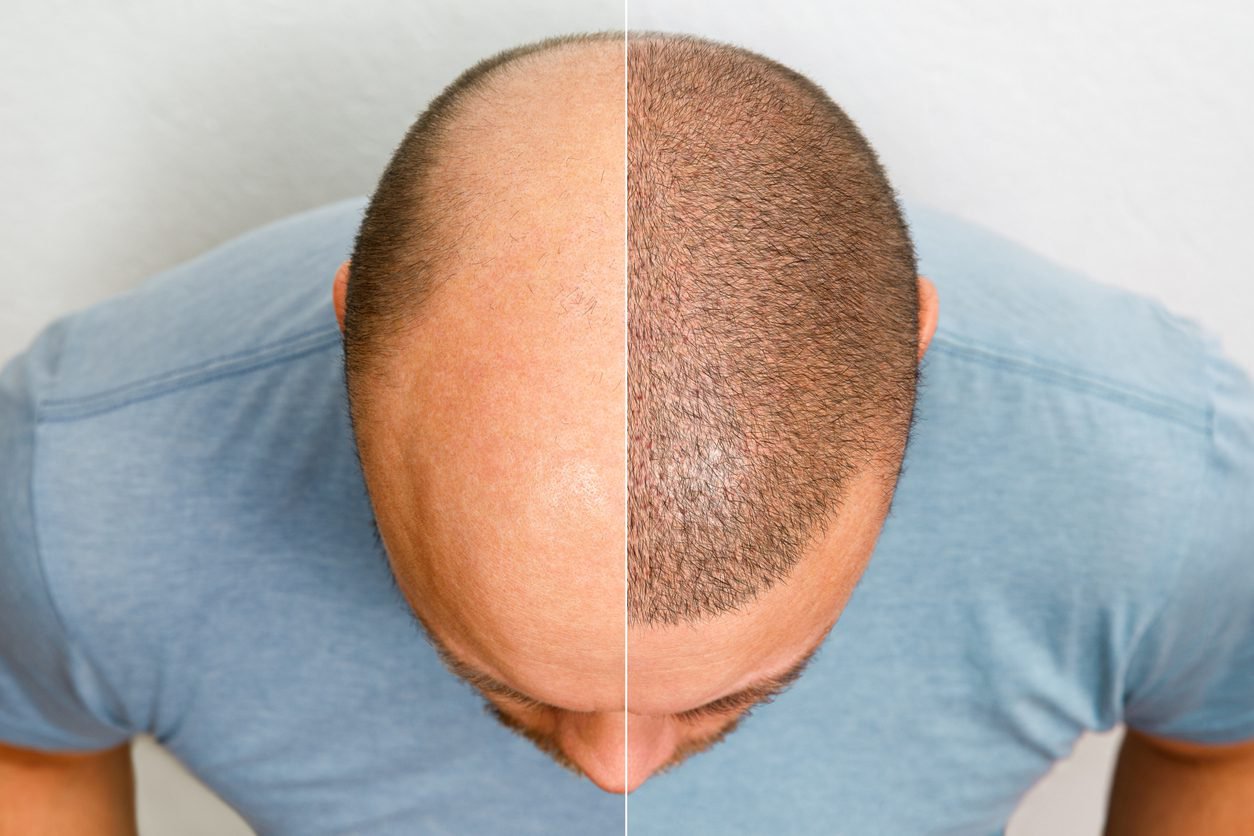
Hair loss is common among men – but it doesn’t have to be permanent. At Avenues Cosmetic, we use state-of-the-art hair transplant techniques to restore natural hair growth and redefine your hairline. Our expert surgeons ensure undetectable, permanent results that blend seamlessly with your natural hair. Hair transplant is a surgery in which we harvest grafts from the back and side of scalp (Donor area) and implant it in the front bald spot (Recipient area). Let us first study how did we reach here.
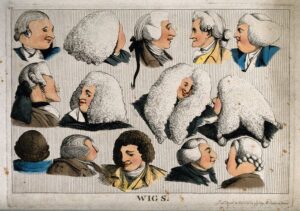
A portion of bald men were embarrassed with their baldness. and through out history men have always looked for methods to cover their baldness. in the earlier years wigs, toupees and caps were used to cover the baldness. Wigs were very popular in those days, as they were convenient.
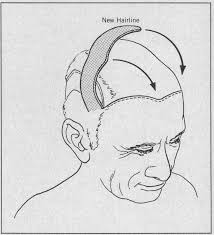
The first recorded hair transplant was done by German doctors in 1822, they used skin grafts to transplant the hairs. In 19th century Scalp flaps, like Jury flaps were used to cover the baldness. The skin from hair bearing area was raised as a flap and rotated into the bald area, the resulting defect was closed with stitches. This was not only tedious and bloody surgery, but it usually resulted in unnatural hair direction, necrosis of fla p and severe scarring.
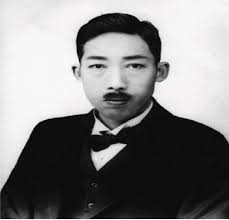
Hair restoration saw its first sincere attempt in the treatment of burns patients. Dr Okuda, a Japanese dermatologist in training, created a technique to help burns victims. He extracted rounded sections of hair bearing scalps and transplanted them in the hairless burns area. Due to the world wars the techniques by the Japanese doctors were largely hidden.
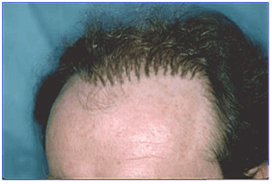
The first modern hair transplant for male pattern baldness is credited to Dr Norman Orentreich, from New York in the year 1952, he is regarded as the “Father of hair transplant”. He was to give the idea of “Donor dominance”. The idea that the hairs in the scalp behaved differently. The donor hairs from the back and sides lasted longer than the front recipient hairs. and the fact that when they were transferred to there new location they continued to grow in the new location. They did not fall out like the native hairs. This was a huge realization back then, and was regarded as a breakthrough in hair transplantation. But as the donor hairs were taken out as large punches, or plugs containing 20 to 30 hairs. The results were not aesthetic, they resembled hair plugs of a doll, rather than a natural look. The Punch graft technique came to be known as “Doll’s hair” look.
It was not until 1980s and 1990s that the work of Dr Rassamen, Dr Unger et al, that there were further refinements thus greatly improving the results. The realization that the hairs in the scalp occurred in natural groupings of individual 1-4 hair follicles, along with sebaceous glands and blood vessels. This paved way to the development of the FUT method or the “Strip Method”. Where a strip of skin is taken from the donor area and using microscopes individual follicular units were dissected out to give more natural results that its predecessor of punch grafts. In 1990s Dr Unger defined the ‘safe zone for harvesting’. This is the zone in which the hairs remain permanently, and is even used today for strip harvesting and FUE harvesting. Thus by mid 90s the concept of ‘Follicular units’ and ‘safe zone’ had started a new era in hair transplant, with greatly improved results.
In early 2000s there was a group of surgeons who were doing extensive research in the field of FUE (Initially the full form was ‘Follicular Unit Extraction’ but ISHRS changed it to ‘Follicular Unit Excision’ to denote the surgical nature of the surgery). The biggest drawback of the strip method was the strip its self and the consequent suturing and the resulting scar. Patients wanted a less invasive method for hair transplant. And with the relentless efforts of the early FUE surgeons it was possible. Initially there was a lot of transaction (the grafts used to be cut off while extracting) in the FUE method. It was difficult to get the required amount of the grafts needed. And FUT was the Gold Standard method for a long time.
During late 2000s and early 2010s there used to be a fierce debate between the FUT surgeons and FUE surgeons in the conferences. But as time passed there was more and more refinements in the science of FUE as well as FUT. So much so that by mid 2010s both the methods were giving the desired results. There we still pluses and minuses in both. Biggest advantage of FUE is that there is no need for suturing of the scalp, and there was a lot of demand for it by the patients due to its apparent less invasive nature.
From 2020 there has been a lot of change in the instrumentation be it for extraction, neograft, Trivelline device, U Graft, WAW device or the ARTAS. and for implantation there are the sapphire blades, the sharp implanters like choi implanters, and blunt implanters like the KEEP implanters are the latest inversions.
Hope you have learnt something new. Want to know more about your baldness and what to do about it? Contact Avenues for more information.